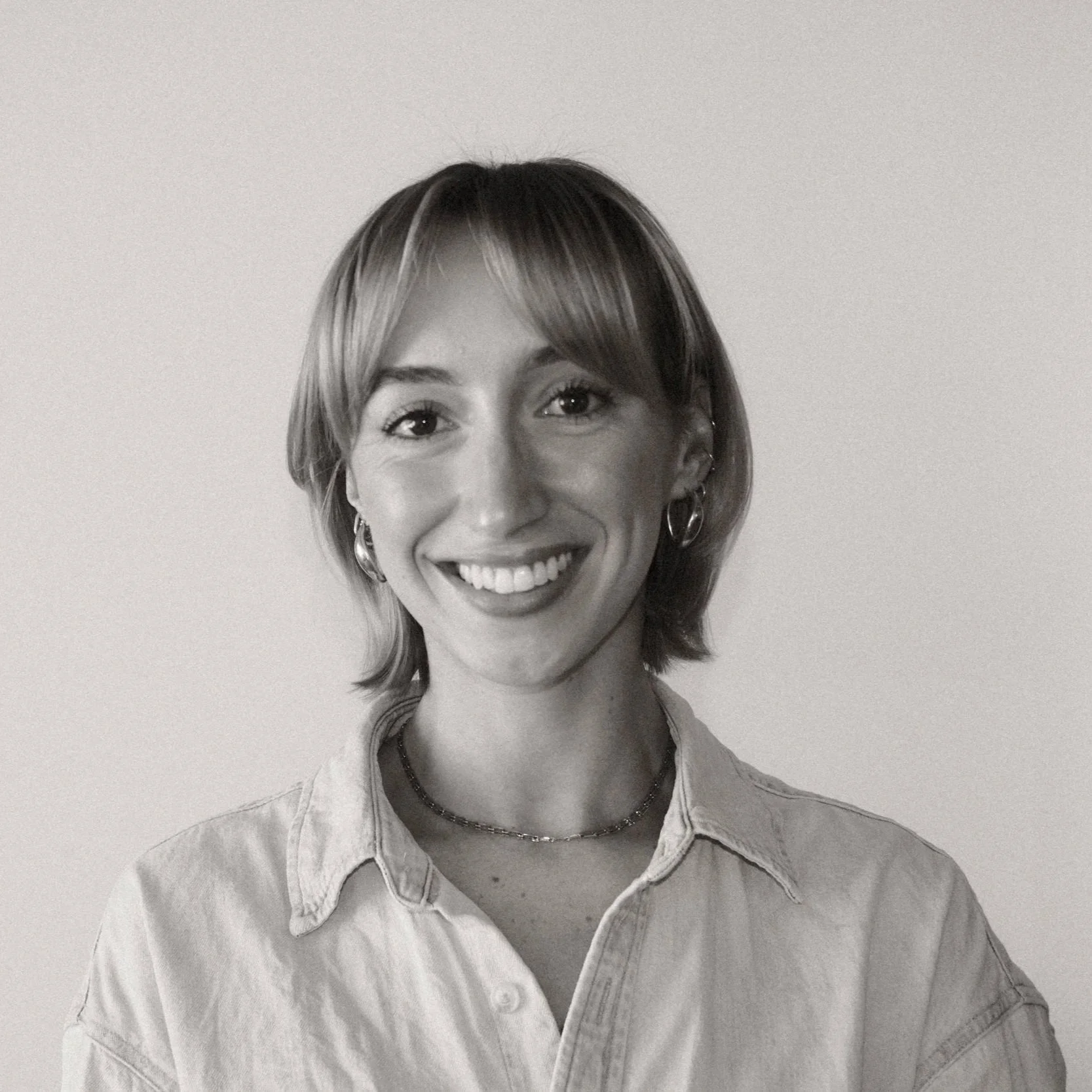
Hi, I’m Izzy.
I’m a UX/Product Designer focused on making complex systems feel intuitive. My work sits at the intersection of technology and human behavior, where I design experiences that help people navigate complexity with clarity and confidence.
My story as a designer, beyond the resume
I’ve always needed to create.
As a kid, that meant dressing up as an artist for career day, drawing floor plans of my house on grid paper, and constantly redecorating my room. I wasn’t just making things, I was trying to understand how things worked and how they felt to live in.
That instinct never really went away.
In high school, I found psychology and got obsessed. The idea that we all experience the world differently, that our brains are constantly taking shortcuts, learning patterns, protecting us. I would stay up late reading about perception, memory, and behavior.
I went into college planning to major in psychology, but one cognitive science class changed everything. It introduced me to the intersection of people and technology. I learned about Alan Turing, early computing, and how technology can work with human cognition instead of against it.
That was the first time I saw all of my interests come together. Creativity, helping people, and understanding how the mind works.
I didn’t grow up knowing what UX was. But looking back, it’s exactly what I had been searching for.
A perspective that shaped how I design
While studying human–computer interaction, I went down a deep rabbit hole on Turing.
Not just his technical work, but his life.
He played a major role in ending World War II and laid the foundation for modern computing. And yet, he was prosecuted for being gay, ultimately leading to his death.
That contradiction stuck with me.
Someone can fundamentally change the world, and still be failed by the systems around them.
It shaped how I think about technology. The things we design are not neutral. They reflect priorities, assumptions, and blind spots. If we’re not intentional, we don’t just create friction, we create exclusion.
That’s something I carry into my work.
Learning how people actually experience systems
In college, I focused on perception and human–computer interaction.
I studied how people interpret motion and spatial cues, including research using VR to understand when users can detect directional change. I became obsessed with the Nielsen Norman Group heuristics and how closely they map to cognitive biases.
The more I learned, the more I realized that “simple” products are rarely simple. They’re the result of a lot of intentional decisions that align with how people already think.
At the same time, I kept creating. I painted daily, sold over 150 stickers, and donated proceeds to Mental Health America.
I was also working 20+ hours a week to support myself through school, while maintaining honors and leading as Head of PR in my sorority. Managing campaigns, designing assets, running events, and leading a team of 15 was my first real experience operating at scale.
Starting a UX career in uncertainty
I graduated in 2020 with a degree in Cognitive Science, focused on HCI.
The timing wasn’t ideal. The job market slowed, and entry-level roles were limited. Instead of rushing into something misaligned, I doubled down on my skills. I completed an advanced UX program through Springboard, expanding beyond research into end-to-end product design.
At the same time, I worked as an educational designer, helping students with disabilities access learning in ways that actually worked for them. I translated dense material into more intuitive, visual formats.
It reinforced something I still believe: good design doesn’t just make things usable, it changes outcomes.
Early work: balancing creativity and usability
After that, I moved into freelance UX across experimental and immersive experiences.
One project involved usability testing for an AR marketing tool tied to a custom Rolls-Royce campaign with Drake and Chrome Hearts. My role was to understand how people interacted with these experiences and work with designers to make sure they were not just visually impressive, but actually usable.
Around this time, I also started my own brand design studio, working with small businesses and clients in the wedding space. It gave me a different perspective on design, owning the full process end to end, from positioning and visual identity to client communication and delivery. It sharpened how I think about constraints, tradeoffs, and what actually matters to the people you’re designing for.
That balance between creativity, usability, and real-world impact is something I still care about a lot.
NetSuite: learning to design within complexity
In 2022, I joined Oracle NetSuite, initially working on a large-scale platform redesign.
Early on, I focused on system consistency and scalability. I partnered closely with the design system team, auditing existing patterns and identifying gaps. I led the design for multi-currency experiences, running discovery workshops, aligning with research, and defining a set of formatting and interaction rules that were adopted company-wide and are still in use today.
When research resources were limited, I stepped in. I ran interviews, synthesized findings, and redesigned flows to work for both advanced and novice users, which is especially challenging in financial software.
This phase of my career taught me how to operate in complexity. Multiple user types, legacy systems, technical constraints, and the need for consistency across a massive platform.
Moving from features to systems
Over time, my role shifted.
I became less focused on individual features and more focused on how everything connects. How decisions scale. How patterns evolve. How teams align.
I started leading workshops to help teams think beyond current constraints, especially around AI. A lot of the challenge wasn’t execution, it was helping people imagine what’s possible.
That led to one of the most defining projects I’ve worked on.
I was the lead designer for NetSuite’s first AI feature, Narrative Insights. What started as an idea became a hackathon-winning project and eventually shipped. Beyond the feature itself, we created a framework that other teams could use to bring AI into their own areas.
That’s where my role started to expand beyond design execution into influence and enablement.
Designing for AI, ambiguity, and scale
From there, I moved into more vision and strategy work.
I became the lead designer on Business360, an AI-driven experience designed to help executives understand complex, multi-area business performance. This work wasn’t about a single flow or feature. It was about defining how intelligence is surfaced, how systems communicate, and how users build trust in AI.
The project was selected as a featured showcase at SuiteWorld, closing out the advanced product keynote.
At this point, my work is less about pixels and more about systems.
I’m often brought into ambiguous, early-stage problems where the path isn’t clear yet. I work across teams, influence direction, and help define how experiences should work before they exist. A big part of my role is also enabling others, creating frameworks, running workshops, and helping teams move faster with more clarity.
Where I am now
My work has evolved from designing features to designing systems, and from execution to shaping direction.
I think a lot about:
how to make complex systems feel intuitive
how to design AI experiences people actually trust
how to create alignment across teams at scale
and how to bring thoughtfulness into products that often prioritize speed over clarity
At the core, it’s still the same.
I’m trying to understand how things work, how people move through them, and how to make that experience feel natural.
Just now, the systems are a lot bigger.